Buying New Construction in Parrish? Read This Before You Sign
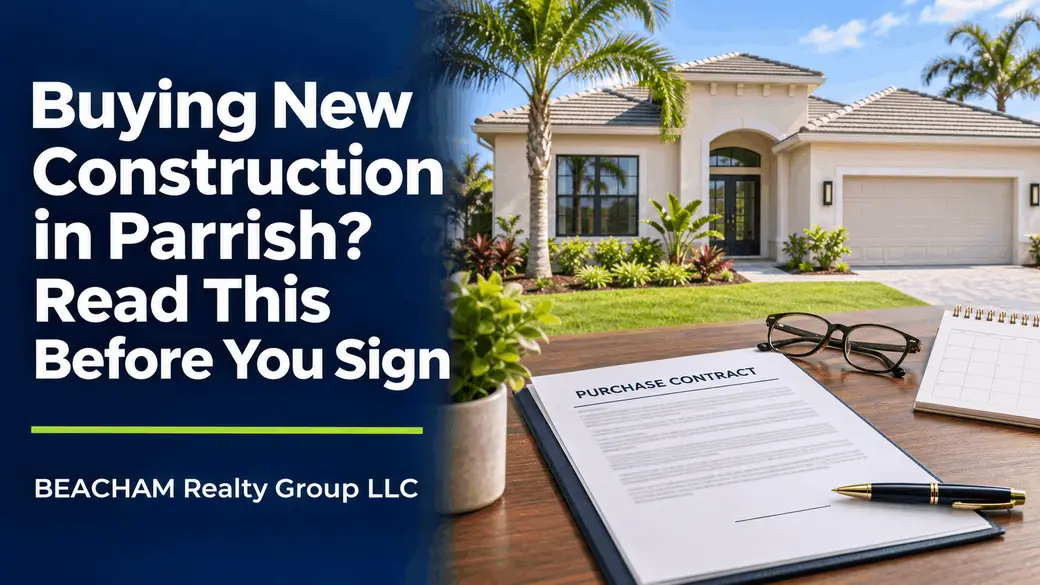
Buying New Construction in Parrish? Read This Before You Sign
You found a new home in Parrish that fits your family. You like the floor plan, the community, and the price. Now the builder is asking you to sign the contract and make a deposit.
Before you do, take time to understand what you are agreeing to.
The contract should help you answer three important questions: What money am I committing? What deadlines must I meet? What happens if the purchase does not go as planned?
Here are the questions I recommend asking before signing a new construction contract in Parrish.
1. How much deposit is required, and when is it due?
Ask for a written breakdown of every deposit or advance payment.
Depending on the purchase, you may encounter an initial deposit, additional payments, or deposits for design selections and upgrades.
Ask:
-
How much is due when I sign?
-
Are additional payments required later?
-
Which payments will be credited toward my purchase at closing?
-
Are upgrade deposits handled differently?
-
Who holds the money, and is it held in escrow?
-
Am I being asked to sign an escrow waiver?
Keep copies of payment instructions and receipts. Before transferring funds, verify the instructions directly with the intended recipient using a trusted phone number.
2. Under what circumstances can I get my deposit back?
This question deserves a specific answer tied to the written agreement.
The Consumer Financial Protection Bureau recommends asking a builder when an upfront deposit can be returned before committing to the purchase.
Ask what happens if:
-
Your loan is not approved.
-
The appraisal comes in below the purchase price.
-
You cannot sell your current home.
-
Construction takes longer than expected.
-
An inspection identifies concerns.
-
You decide you no longer want to proceed.
These situations may be treated differently. Do not assume that changing your mind or encountering a problem automatically makes your deposit refundable.
Ask where the contract addresses each situation and what notices or deadlines apply.
For an explanation of your legal rights, have a Florida real estate attorney review the agreement before you sign.
3. What financing deadlines do I have to meet?
A preapproval letter is a starting point. Ask your lender what remains before final approval and closing.
Then compare the lender’s requirements with the builder’s contract.
Questions to resolve include:
-
When must I apply for financing?
-
Is there a deadline for obtaining loan approval?
-
What financing contingency, if any, is included?
-
What happens if my financial circumstances change?
-
What must I provide if financing is denied?
-
How and when must the builder receive notice?
Also ask how a lender change could affect your deadlines, incentives, or closing schedule.
If you are comparing the builder’s lender with another lender, read Builder Incentives in Parrish, FL: In-House Lender vs. Your Own Lender.
4. Is the completion date an estimate or a contractual deadline?
A sales conversation about when a home should be ready is useful for planning. You also need to understand what the signed agreement says.
Ask:
-
Is the stated completion date an estimate?
-
Does the contract establish a separate completion deadline?
-
What circumstances allow the builder to extend the timeline?
-
How will I receive construction updates?
-
How much notice will I receive before closing?
-
What happens if the home is ready earlier than expected?
For a family coordinating work, school, a lease, or the sale of another home, these details can affect the entire move.
If you are considering an inventory home, Quick Move-In Homes in Parrish, FL: What Move-In Ready Really Means explains why you should confirm its actual construction stage.
5. Who pays the additional costs if closing is delayed?
A later closing can create expenses beyond the purchase itself.
Think about temporary housing, storage, an additional move, or extending your mortgage rate lock.
Ask the builder what the contract says about delays and responsibility for related expenses. Separately, ask your lender:
-
When does my rate lock expire?
-
Can it be extended?
-
What would an extension cost?
-
Who would pay that cost?
-
Could the loan terms or incentive change?
The CFPB explains that a rate lock applies for a specified period and that an extension can be expensive. Get your lender’s policy in writing.
For example, if your rate lock ends before the home is ready, you need to understand the available options. Do not assume the builder or lender will automatically cover the difference.
6. What exactly am I buying at this price?
Make sure the documents identify the home and the agreed selections clearly.
Review:
-
The lot and property description.
-
The floor plan and exterior elevation.
-
Structural options.
-
Included finishes and appliances.
-
Lot premiums and upgrade charges.
-
Any allowances or items you must purchase separately.
Ask whether the contract permits substitutions or changes and how those will be handled.
If something in the model home matters to your decision, confirm whether it is included in your home. Ask for important promises to be documented in the agreement or an appropriate written addendum.
7. Are the incentives and their conditions documented?
A rate advertisement or verbal offer does not explain every condition.
Ask for written confirmation of:
-
The incentive amount or benefit.
-
Which homes qualify.
-
Required lenders or other service providers.
-
Contract and closing deadlines.
-
Buyer and loan eligibility requirements.
-
What happens if construction delays the closing.
-
Whether the incentive can be combined with other offers.
Then have your lender explain how the incentive applies to your specific loan.
A large advertised credit is only useful if you qualify for it and can use it under the applicable terms.
8. What are my inspection and repair procedures?
Discuss independent inspections before signing.
Ask when your inspector can access the property, what scheduling requirements apply, and how findings must be submitted.
You should also understand:
-
Whether the contract includes an inspection contingency.
-
How the builder responds to reported concerns.
-
Whether repairs can be checked before closing.
-
How unfinished work at closing is documented.
-
Which concerns are handled through the warranty process.
An inspection report identifies findings. Your contract helps determine the available next steps. Do not assume the report alone creates a right to cancel or postpone closing.
9. What happens if either party does not perform?
Ask an attorney to explain the contract’s default, termination, and dispute provisions.
Questions worth discussing include:
-
What counts as a buyer default?
-
What happens if the builder does not meet its obligations?
-
Are there notice requirements or opportunities to correct a problem?
-
What remedies does each party have?
-
Does the agreement require mediation or arbitration?
-
What does it say about attorney’s fees and other costs?
These provisions may receive less attention than the floor plan and purchase price, but they deserve a careful review.
Give yourself time to understand the agreement
The Florida Bar recommends consulting an experienced Florida real estate attorney before signing a purchase contract.
Ask for the complete agreement, including referenced addenda and disclosures, early enough to review it.
If someone explains a provision verbally, ask them to point to the language. If an explanation remains unclear, get clarification before committing.
You should understand the obligations you are accepting before you sign and pay.
Before-signing checklist
Make sure you can answer these questions:
-
What payments are required, and when?
-
Who holds each payment?
-
When can a deposit be returned?
-
What financing and notice deadlines apply?
-
What does the contract say about completion and closing?
-
Who bears additional costs if the timeline changes?
-
Are the home’s features and incentive terms documented?
-
How are inspections, repairs, and unfinished work handled?
-
What happens if either party does not perform?
-
Have I obtained legal clarification where needed?
Have questions before choosing your Parrish new construction home?
Call me at (813) 333-2340 or email Irvin@IrvinBeacham.com.
I can help you organize the purchase details, identify questions to raise with the builder and lender, and keep track of the steps ahead. A Florida real estate attorney can explain the contract’s legal effect and advise you about provisions that affect your rights.
Irvin Beacham Jr.
BEACHAM Realty Group LLC
Helping Families One House At A Time.
Also exploring new homes in Parrish?
You can sign up for Parrish 34219 new construction updates as you continue comparing your options.
Sources and additional reading
Information reviewed November 4, 2026. This article provides general education, not legal advice. Contract provisions, financing requirements, and incentive terms vary by purchase.
Categories
Recent Posts