Flood Zones in Parrish, FL: How to Check the Exact Lot Before You Sign
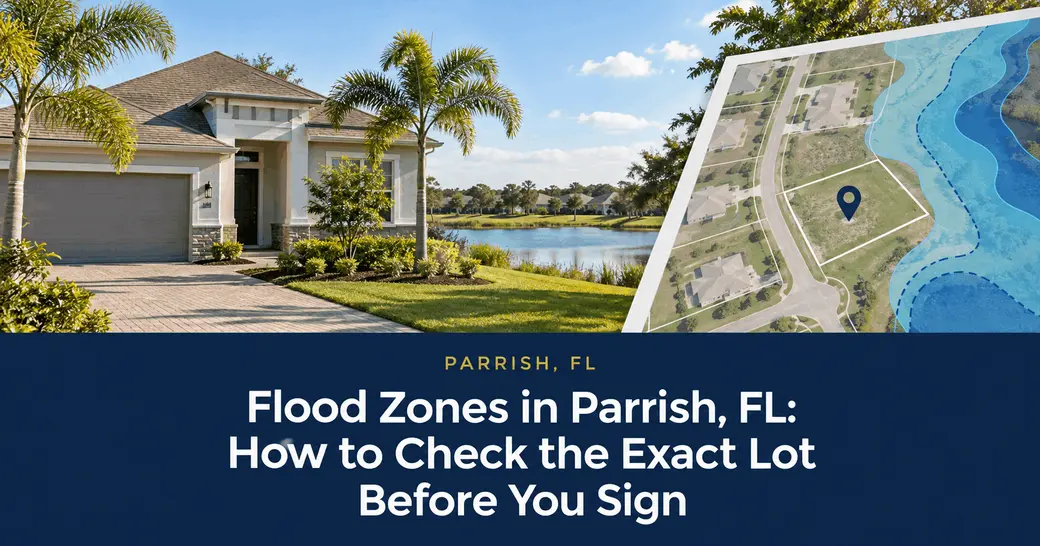
Parrish has rivers, creeks, ponds, and low areas, and new communities are built all around them. Two homes in the same community can sit in different flood zones. That can change your insurance cost and, in some cases, whether your lender requires flood insurance.
The good news: you can check the exact lot before you sign. Here's how.
What a Flood Zone Is
FEMA maps areas by flood risk. The labels you'll see most often:
- Zones that start with "A" (like AE): High-risk areas. If you have a federally backed mortgage, your lender will require flood insurance.
- Zone X: Moderate- to low-risk areas. Flood insurance usually isn't required by the lender, but it's still available, and often cheaper.
Important: "Zone X" doesn't mean "no risk." Homes outside high-risk zones can still flood, especially during heavy rain events.
Step 1: Look Up the Exact Lot
Manatee County has a free flood-risk website called ForeRunner. Search the address or parcel to see flood zone and other flood-related details for that property.
For a brand-new lot that doesn't have an address yet, ask the builder for the lot number and parcel ID, or ask which flood zone the lot is in. Then confirm it yourself.
Step 2: Ask for the Elevation Certificate
An elevation certificate shows how high the home sits compared with the expected flood level for that area. Insurance companies often use it to price flood coverage.
- Ask the builder whether an elevation certificate has been done, or when it will be.
- For existing homes, Manatee County lets you request a copy of the elevation certificate on file, if there is one.
Step 3: Get a Flood Insurance Quote Before You Sign
Don't wait until closing. Ask an insurance agent for a flood quote on the exact lot, using the elevation certificate if one is available. Then add that cost to your monthly budget, along with HOA dues, CDD fees, and property taxes.
If You'll Have Citizens Insurance
If your homeowners policy will be with Citizens Property Insurance, flood insurance is being phased in as a requirement for many policyholders, even outside high-risk flood zones. Citizens' schedule required it at renewal for higher-value homes first, with the remaining required policies by January 1, 2027. Ask your insurance agent how this applies to you.
What About Florida's Flood Disclosure Law?
As of October 1, 2025, Florida sellers of residential property must disclose what they know about past flood damage to the home and any assistance they received to repair it. That's helpful on resale homes. On a brand-new home, there may be little or no flood history to disclose, so do your own checking using the steps above.
Questions to Ask the Builder
- Which flood zone is this lot in?
- Has an elevation certificate been done? If not, when will it be?
- Is the lot next to a pond, creek, or preserve, and how does drainage work in this section?
- Has this section of the community ever had flooding issues?
How I Can Help
The builder's sales team can give you lot information for their community. My role is different. I represent you as the buyer. I help you check the flood zone, collect elevation and insurance information, and compare lots side by side before you sign.
If you're looking at new construction in Parrish, call me at (813) 333-2340.
More Parrish guides:
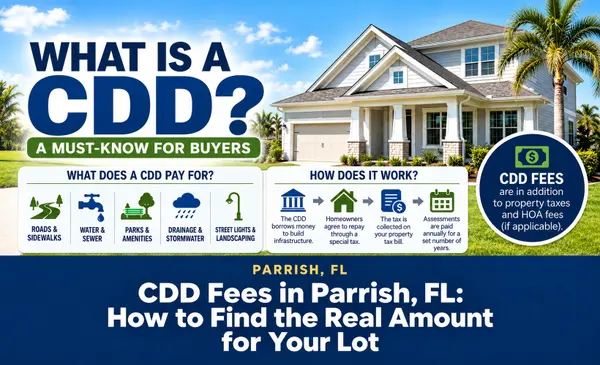
- CDD Fees in Parrish, FL: How to Find the Real Amount for Your Lot
- Commuting From Parrish, FL: Rush Hour vs. Weekend Drive Times
- Quick Move-In Homes in Parrish, FL: What Move-In Ready Really Means
Compare the 10 Parrish communities before you pick a lot.
Just browsing? See homes for sale in Parrish
Information checked October 11, 2026. Flood zones, insurance rules, and requirements can change. Verify with Manatee County, your insurance agent, and your lender. This post is general information, not legal or insurance advice. BEACHAM Realty Group does not represent any builder.
Categories
Recent Posts